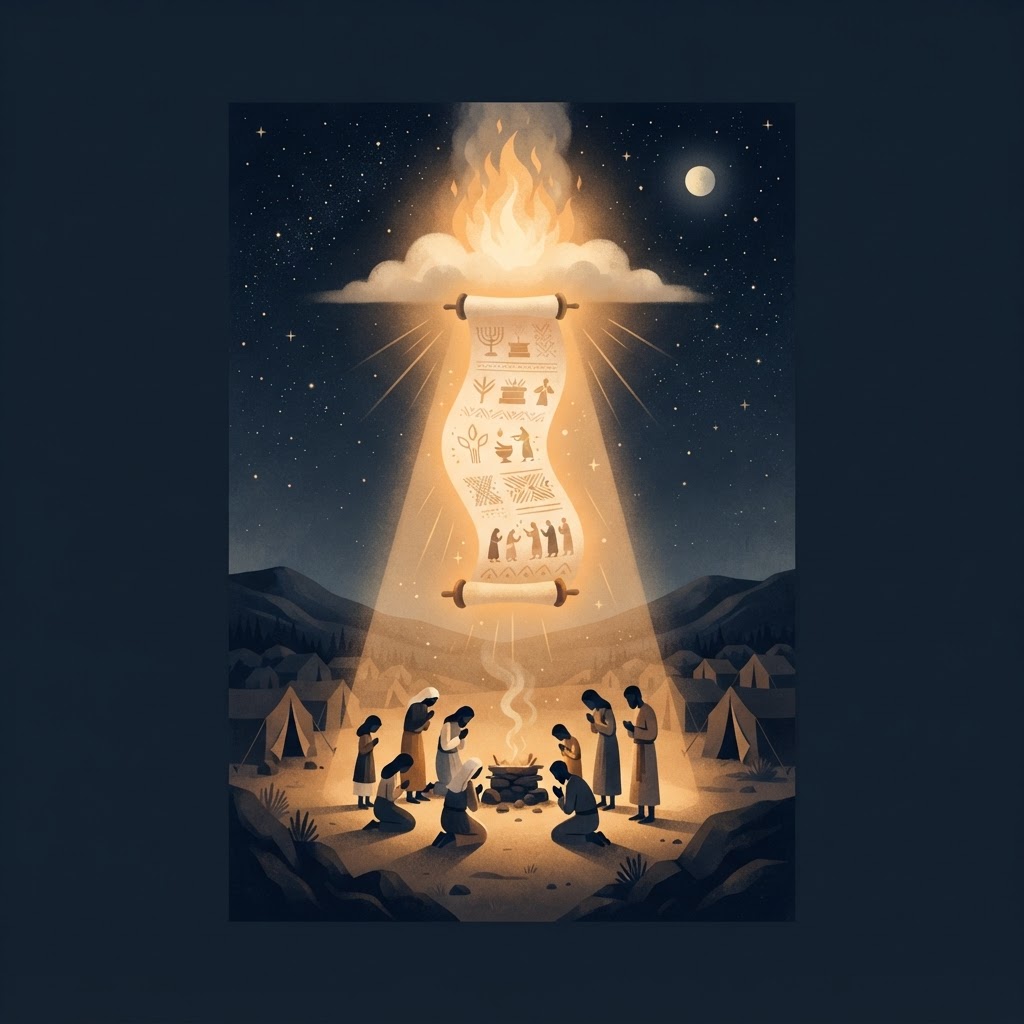
A Holy People
Leviticusc. 1446 BC

A Holy People

God gives Israel detailed laws for worship, sacrifice, purity, and holy living, teaching them what it means to dwell with a holy God.

5 min read
Share

The Biblical Account

Leviticus outlines the sacrificial system, priesthood, dietary laws, moral codes, and festival calendar. It repeatedly declares, 'Be holy, for I am holy.' The book shows that a holy God requires a holy people — and provides a way of approach through sacrifice.

The Day of Atonement (Yom Kippur) stands at the center: once a year, the high priest entered the Most Holy Place with blood to make atonement for the nation.

The World at That Time

Leviticus was given at Sinai (c. 1446 BC) while Israel camped at the foot of the mountain. The laws reflected ancient Near Eastern forms but were radically distinct in their moral and theological content.

Sacrifice and purity were common religious categories in the ancient world, but Leviticus uniquely tied them to the character of Yahweh and the ethics of love for neighbor.

Faith Reflection

Leviticus can feel distant, but it whispers Christ on every page. Every sacrifice, every priest, every wash points forward to Jesus — the perfect High Priest and the once-for-all sacrifice who makes us clean.

God still calls His people to holiness, now made possible not by our striving but by His Spirit within us.

Scripture Reference

Leviticus

“Your word is a lamp to my feet and a light to my path.” — Psalm 119:105