The Passover in Jesus' Day: The Feast He Longed to Share
Life in First Century Judeac. 30 AD

The Passover in Jesus' Day: The Feast He Longed to Share

Passover was the most sacred pilgrimage festival of the Jewish year — and it was during this meal that Jesus instituted the Lord's Supper.

5 min read
Share

The Biblical Account

Passover commemorated Israel's deliverance from Egypt, when the destroying angel 'passed over' homes marked by the blood of a lamb (Exodus 12). By Jesus' time, it was one of three festivals requiring pilgrimage to Jerusalem. The city swelled to several times its normal population.

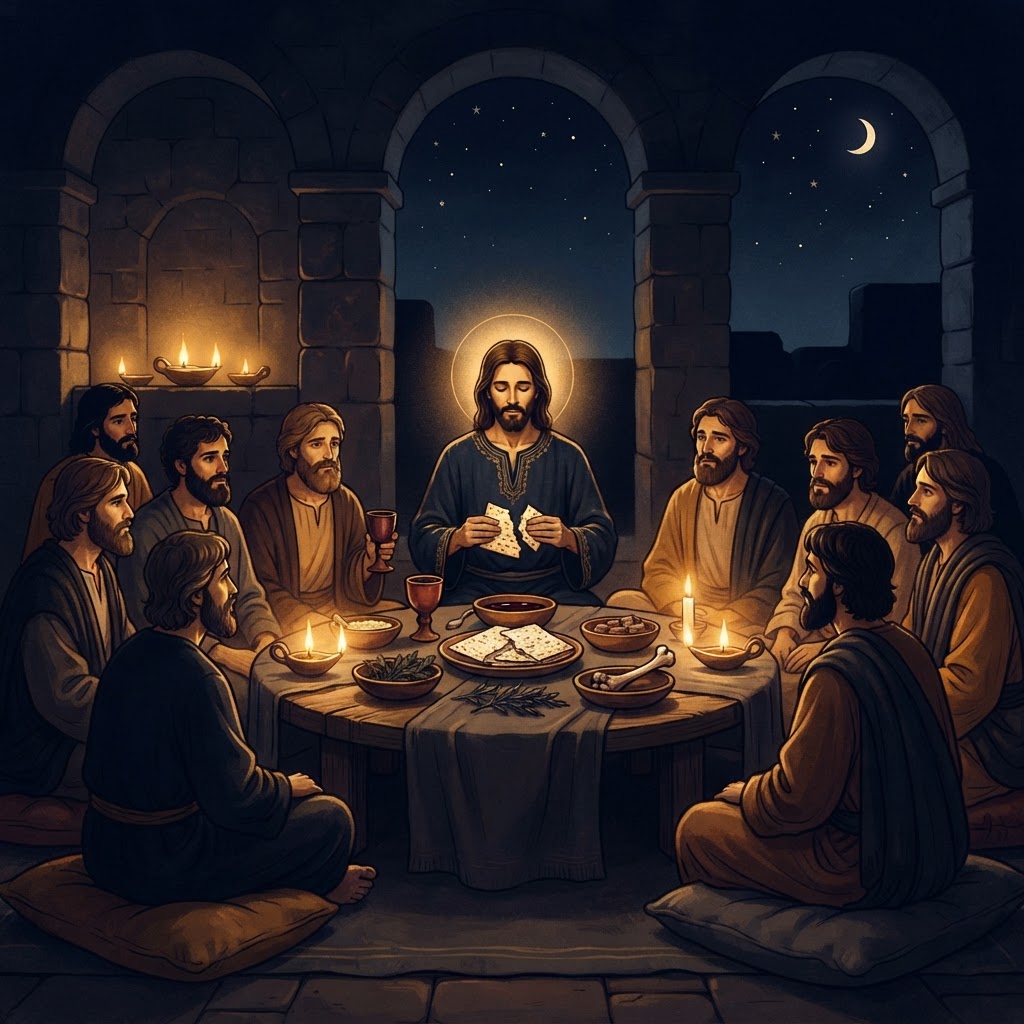
Jesus eagerly anticipated this final Passover: 'I have earnestly desired to eat this Passover with you before I suffer' (Luke 22:15). It was during this meal that He took the bread, gave thanks, broke it, and said, 'This is my body, which is given for you.' He took the cup, saying, 'This cup that is poured out for you is the new covenant in my blood' (Luke 22:19-20). The Passover lamb, which had pointed back to Egypt for fifteen centuries, now pointed forward to Calvary.

The World at That Time

Passover in first-century Jerusalem was a massive undertaking. Josephus estimates that over two million pilgrims gathered for the festival, though modern scholars suggest the number was lower but still significant — perhaps 100,000 to 500,000 visitors flooding a city of 30,000 to 40,000 residents.

Each family needed a lamb, sacrificed at the temple by a priest. The lambs were slaughtered in three shifts to manage the crowds. The blood was caught in basins and poured at the base of the altar. The roasted lamb was then taken home or to a rented room for the Seder meal.

The meal itself followed a structured order: bitter herbs (reminding of slavery), unleavened bread (bread of haste), cups of wine (four cups, each with symbolic meaning), and the retelling of the Exodus story. It was a meal of memory, hope, and anticipation — the final cup looked forward to God's future redemption. Jesus likely used the third cup (the cup of redemption) or the fourth (the cup of consummation) when He spoke of the new covenant in His blood.

Faith Reflection

Every element of Passover pointed to Christ. The lamb without blemish — He was without sin. The blood on the doorpost — His blood shed for us. The unleavened bread — bread made without yeast, a symbol of purity. The bitter herbs — the bitterness of suffering. The deliverance from bondage — our deliverance from sin and death.

When Jesus said, 'Do this in remembrance of me,' He wasn't starting a new ritual from scratch. He was fulfilling an ancient one. For fifteen hundred years, Passover had been a promise written in lamb's blood. Now the promise was being fulfilled in the Lamb of God.

Scripture Reference

Luke 22:7-20; Exodus 12; 1 Corinthians 5:7

“Your word is a lamp to my feet and a light to my path.” — Psalm 119:105