Crossing the Red Sea: Faith on Dry Ground
The Exodusc. 1446 BC

Crossing the Red Sea: Faith on Dry Ground

Trapped between the sea and Pharaoh's army, Israel faced an impossible choice — and God made a way where there was no way.

4 min read
Share

The Biblical Account

After the final plague, Pharaoh finally released Israel. But grief-stricken over the loss of his firstborn, he changed his mind and pursued them with 600 chosen chariots. When Israel saw the Egyptian army approaching, they were terrified: 'It would have been better for us to serve the Egyptians than to die in the wilderness' (Exodus 14:12).

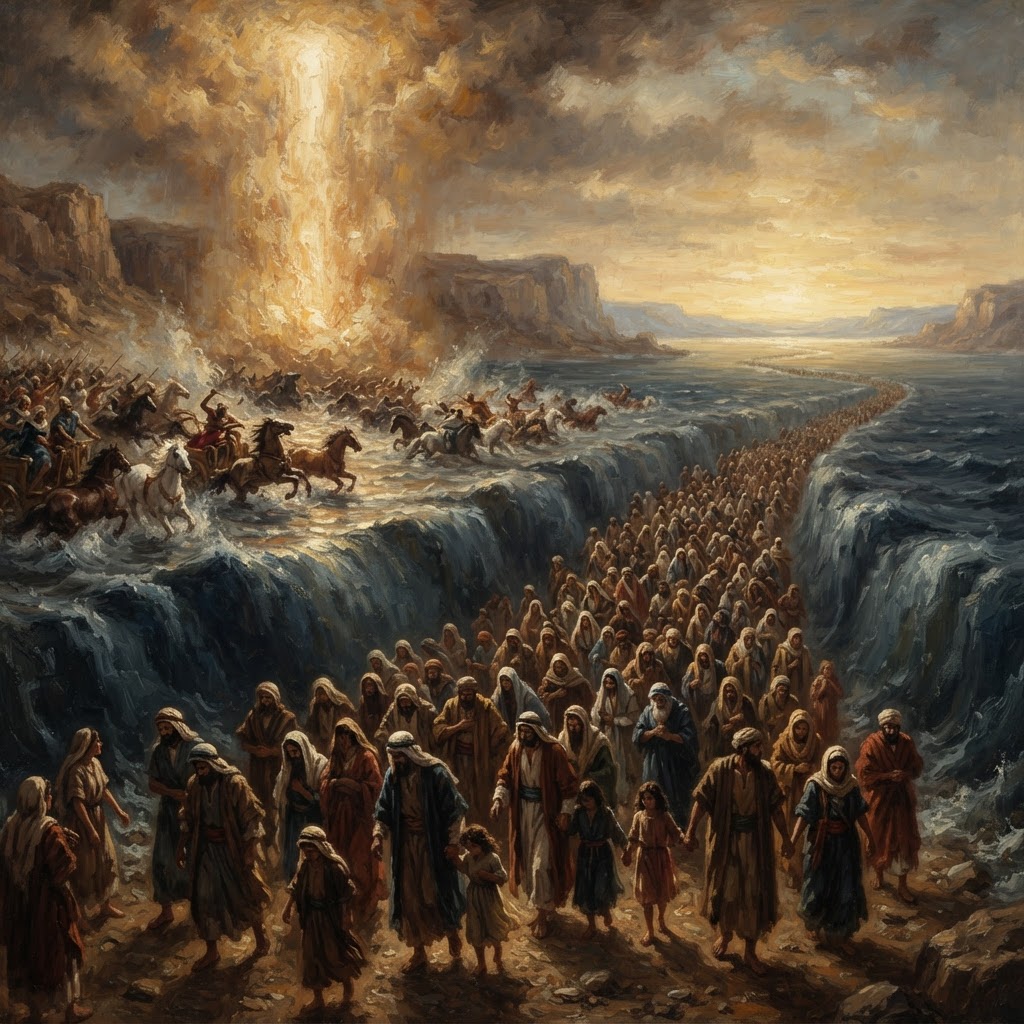
Moses' response is one of the great declarations of faith in Scripture: 'Fear not, stand firm, and see the salvation of the LORD, which he will work for you today' (Exodus 14:13). That night, the pillar of cloud moved between Israel and Egypt, giving light to one and darkness to the other. Then Moses stretched out his hand, and the Lord drove back the sea with a strong east wind all night, turning the sea into dry land. The waters were a wall on their right and on their left.

Israel crossed safely. When Egypt followed, the waters returned and the entire army was destroyed. The same sea that was Israel's path of salvation became Egypt's grave.

The World at That Time

The exact location of the Red Sea crossing (literally 'Sea of Reeds' — Yam Suph in Hebrew) is debated by scholars, with proposals ranging from the Gulf of Suez to lakes in the northern Delta region. What is clear is the military impossibility of the situation. Egyptian chariots were the shock troops of the ancient world — fast, heavily armed, and terrifying. A column of fleeing slaves, including children and elderly, had no chance against them.

The geography itself was part of the trap. Israel appeared to be wandering aimlessly, which Pharaoh interpreted as their being 'entangled in the land' and 'shut in by the wilderness.' Ancient Egyptian military strategy often used terrain to corner enemies. God himself led Israel into this apparent trap. From a military standpoint, the situation was hopeless.

In the ancient Near East, sea represented chaos and disorder — the realm of untamed powers. When God parted the sea and then let it return, He demonstrated His mastery over chaos itself.

Faith Reflection

How often do we find ourselves hemmed in — a problem behind us and an ocean ahead? Israel's response was fear and regret. It's the same response we have when we feel trapped by circumstances. But God sometimes leads us into impossible situations precisely so that His power can be displayed.

Notice that God didn't teleport Israel across the sea. He made them walk through it on dry ground, step by step. The same wind that parted the waters also dried the seabed beneath their feet. Faith doesn't mean the obstacle disappears instantly — it means we walk through it with God.

Scripture Reference

Exodus 14–15

“Your word is a lamp to my feet and a light to my path.” — Psalm 119:105