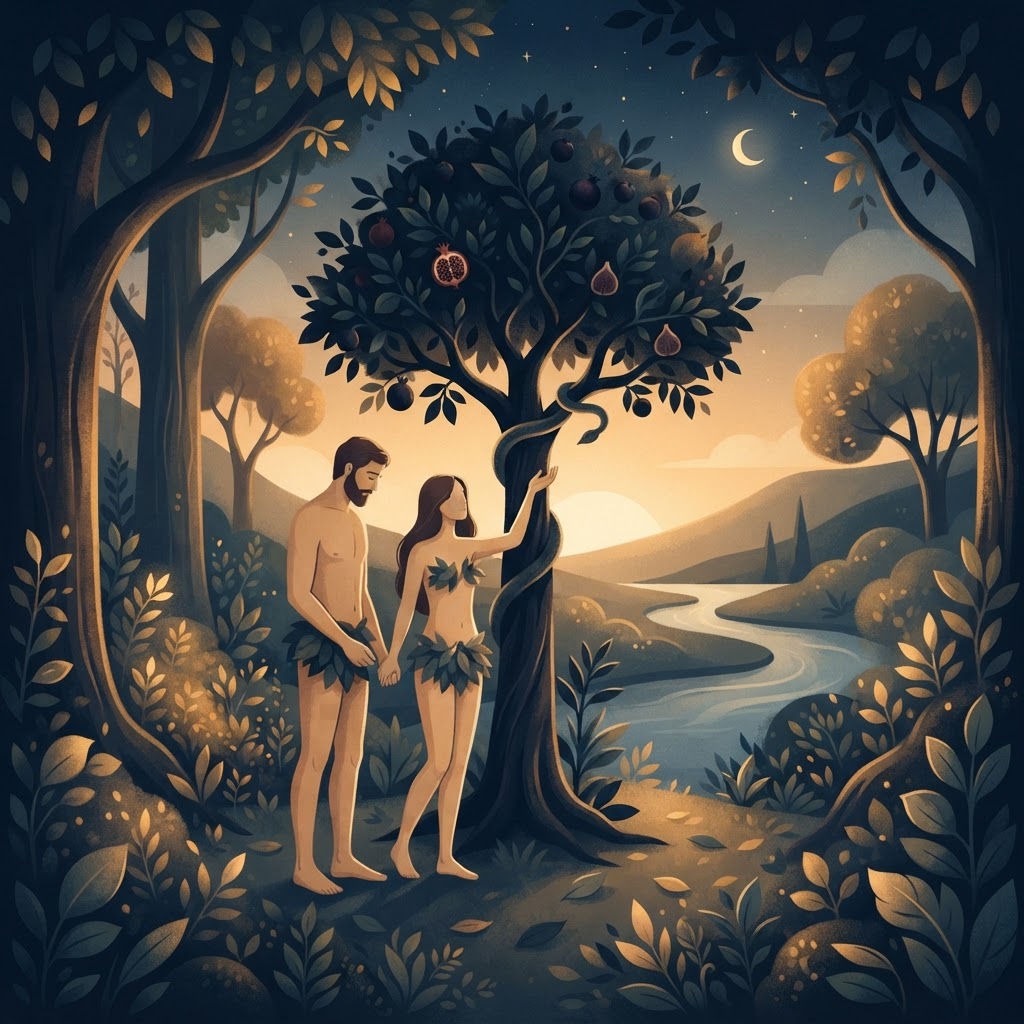
The Dawn of Existence and the Choice of Heart: Eden and the Fall
Creation and OriginsPre-history

The Dawn of Existence and the Choice of Heart: Eden and the Fall

In a perfect garden, the first humans chose independence from God — and the consequences echo through every generation since.

7 min read
Share

The Biblical Account

God created the world in six days and declared it 'very good' (Genesis 1:31). He formed man from the dust, breathed life into him, and placed him in Eden — a paradise with every tree pleasant to see and good for food, including two unique trees: the Tree of Life and the Tree of the Knowledge of Good and Evil. God commanded: 'You may surely eat of every tree of the garden, but of the tree of the knowledge of good and evil you shall not eat, for in the day that you eat of it you shall surely die' (Genesis 2:16-17).

The serpent — more subtle than any beast — questioned God's word: 'Did God actually say...?' He promised: 'You will be like God, knowing good and evil' (Genesis 3:5). Eve ate. Adam ate. In an instant, innocence was lost. 'Then the eyes of both were opened, and they knew that they were naked' (Genesis 3:7).

God's response was just and merciful. He cursed the serpent, declaring that the woman's seed would crush his head (Genesis 3:15) — the first promise of a Redeemer. He pronounced consequences for the woman and the man. And He clothed them with animal skins — the first death in Eden, a substitutionary covering for their shame. He expelled them from Eden, lest they 'take also of the tree of life and eat, and live forever' in their fallen state (Genesis 3:22).

The World at That Time

Genesis is theological history, not a scientific manual. It was written to a people coming out of Egypt, surrounded by pagan creation myths that depicted the world as the accidental byproduct of warring gods. Genesis 1 is a radical rebuttal: one God, creating by His word alone, declaring His creation good.

The ancient Near Eastern creation accounts (Enuma Elish, Atrahasis) described humans as created to serve as slaves to the gods. Genesis presents humans as the climax of creation — made in God's image, given dominion over the earth, invited into partnership with God.

The serpent was identified later in Scripture as Satan (Revelation 12:9). In ancient Near Eastern mythology, serpents symbolized chaos, cunning, and sometimes healing. The Eden serpent embodies rebellion against God's order.

The 'seed of the woman' (Genesis 3:15) — the protoevangelion, or 'first gospel' — is the earliest promise of redemption. Every human is the seed of a man; only one man in history was the seed of a woman alone: Jesus Christ, born of a virgin, who would crush the serpent's head at the cross.

Faith Reflection

The Fall is not just an ancient story — it is our story. Every person since Adam and Eve has faced the same choice: to trust God's definition of good and evil, or to decide for ourselves. 'You will be like God, knowing good and evil' was the temptation — and it is still the core of all sin: the desire to be our own god.

The consequences were immediate: shame (they knew they were naked), blame (Adam blamed Eve, Eve blamed the serpent), alienation (they hid from God), and death (spiritual death came instantly; physical death came eventually).

But even in judgment, God showed mercy. He promised a Redeemer before He expelled them. He clothed them before He sent them away. Every piece of the gospel is prefigured in Genesis 3: a serpent to be defeated, a seed of the woman to come, a sacrifice to cover shame, and a God who pursues even those who have rejected Him.

'Where are you?' God called to Adam (Genesis 3:9). Not because God didn't know — but because Adam needed to hear the question. God still calls to the hiding. He still seeks the lost. He still clothes the shamed with the sacrifice of His Son.

Scripture Reference

Genesis 1-3; Romans 5:12-21; Revelation 12:9

“Your word is a lamp to my feet and a light to my path.” — Psalm 119:105