In the Beginning: Creation and the God Who Speaks
Old TestamentPre-history

In the Beginning: Creation and the God Who Speaks

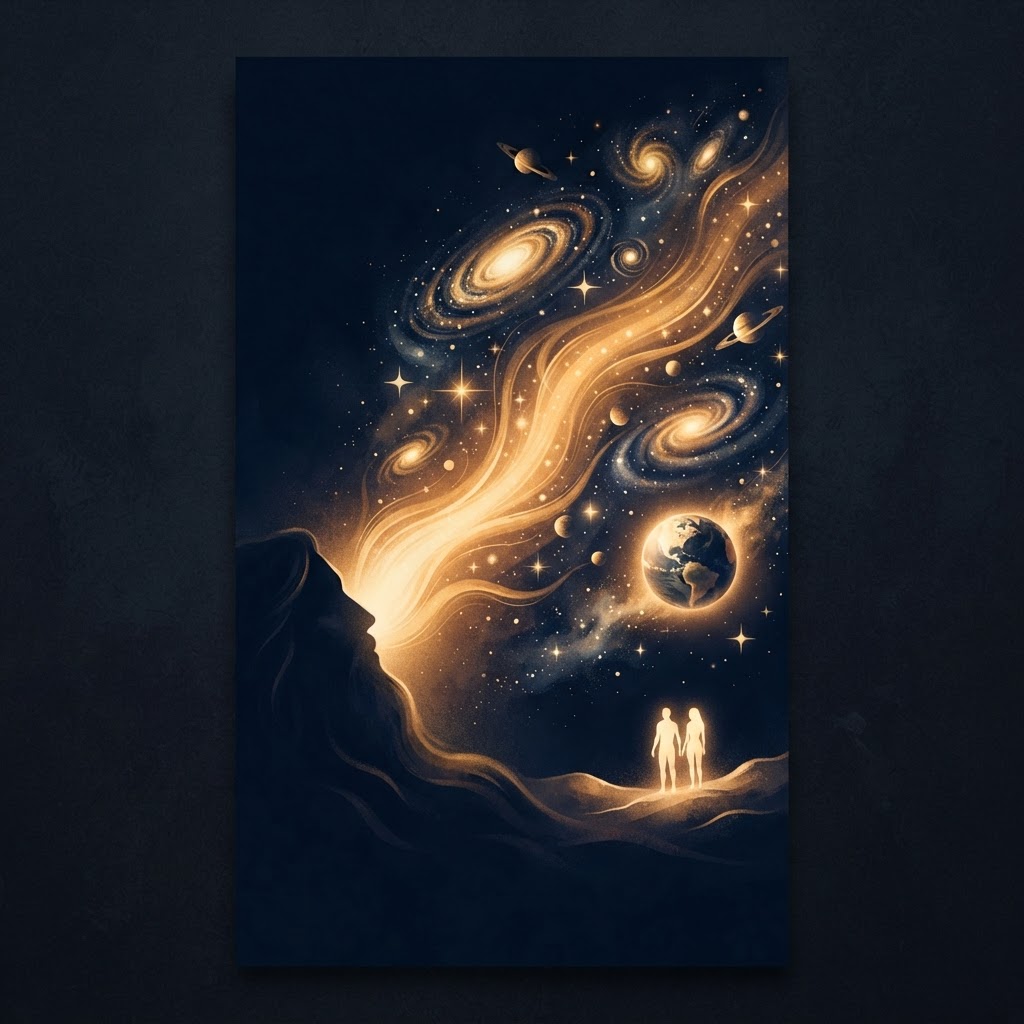
The Bible opens with God speaking a universe into existence — and declaring that everything He made, including humanity, was very good.

7 min read
Share

The Biblical Account

'In the beginning, God created the heavens and the earth' (Genesis 1:1). With these words, the Bible establishes the most fundamental truth: God is, and God creates. He is not part of the universe — He is before it, above it, and the reason for it.

Creation unfolds in six days, each initiated by God's word. 'And God said' — ten times in Genesis 1. Light, sky, land, sea, vegetation, sun, moon, stars, fish, birds, animals — all called into being by the sheer power of divine speech. 'By the word of the LORD the heavens were made... He spoke, and it came to be' (Psalm 33:6, 9).

The climax is humanity: 'Let us make man in our image, after our likeness' (Genesis 1:26). Humans are not just another species — they are image-bearers, designed to reflect God's character, exercise dominion over creation, and enjoy relationship with Him. 'Male and female he created them' (1:27) — equal in dignity, complementary in design, together bearing God's image.

After each day, God saw that it was 'good.' After creating humans on the sixth day, He saw that it was 'very good' (1:31). The seventh day, God rested — not from exhaustion but in satisfaction, establishing the pattern of Sabbath for all creation.

The New Testament reveals that Christ was the agent of creation: 'All things were made through him, and without him was not any thing made that was made' (John 1:3). 'For by him all things were created... all things were created through him and for him' (Colossians 1:16). The God who spoke the world into being is the Word who became flesh.

The World at That Time

Genesis was written to a people coming out of Egypt — a culture saturated with polytheistic creation myths. The Egyptian, Mesopotamian, and Canaanite creation accounts described the world as the accidental result of divine conflict — gods fighting, mating, and dismembering each other to form the cosmos. Humans were created as an afterthought, to serve as slaves.

Genesis 1 is a deliberate, radical rebuttal. There is one God. He creates by His word alone — no struggle, no competition. He creates freely and intentionally. He creates humans not as slaves but as His image-bearers, given dominion. And He declares it all 'very good.'

The seven-day structure is theological, not necessarily scientific. In the ancient world, seven was the number of completeness and covenant. God's creative work follows a pattern: days 1-3 form the 'domains' (light/dark, sky/sea, land), and days 4-6 fill them with 'rulers' (sun/moon, fish/birds, animals/humans). Day 7 — the Sabbath — is the crown, where God enters His creation to dwell with His people.

The phrase 'formless and void' (tohu va-vohu, Genesis 1:2) describes untamed potential. God doesn't start with nothing — He starts with chaos and brings order. This theme runs through all of Scripture: God bringing order from chaos, light from darkness, life from death.

Ancient Near Eastern creation accounts often included a 'temple' as the capstone — a dwelling place for the god. In Genesis, the seventh day functions as God's temple rest. The whole cosmos is His dwelling. Later, the tabernacle and temple echo creation imagery — they are miniature representations of Eden, where God dwells with His people.

Faith Reflection

Genesis 1 tells us who God is, who we are, and what the world is. God is the Creator — sovereign, purposeful, good. We are His image-bearers — designed for relationship, dignity, and purpose. The world is His creation — ordered, meaningful, and originally very good.

Being made in God's image is the foundation of human dignity. Every person — regardless of race, gender, ability, age, or status — bears the image of God. This is why racism is evil, why injustice is wrong, why exploitation is sin, why every human life has infinite value. You cannot look at another human being and not see someone who reflects, however dimly, the face of God.

The goodness of creation also matters. The material world is not a mistake or a prison — it is God's good gift. Our bodies, our work, our food, our relationships, our creativity — all are part of God's good design. We are not angels trapped in flesh. We are humans, gloriously embodied, living in a world God called 'very good.'

And the Sabbath matters. God didn't need to rest — but He chose to. He established a rhythm: work and rest, labor and delight, doing and being. In a culture that defines us by our productivity, Sabbath is a radical act of trust. It says: God is God, and I am not. The world will not fall apart if I stop. He holds it together.

Scripture Reference

Genesis 1-2; Psalm 33:6-9; John 1:1-3; Colossians 1:16

“Your word is a lamp to my feet and a light to my path.” — Psalm 119:105