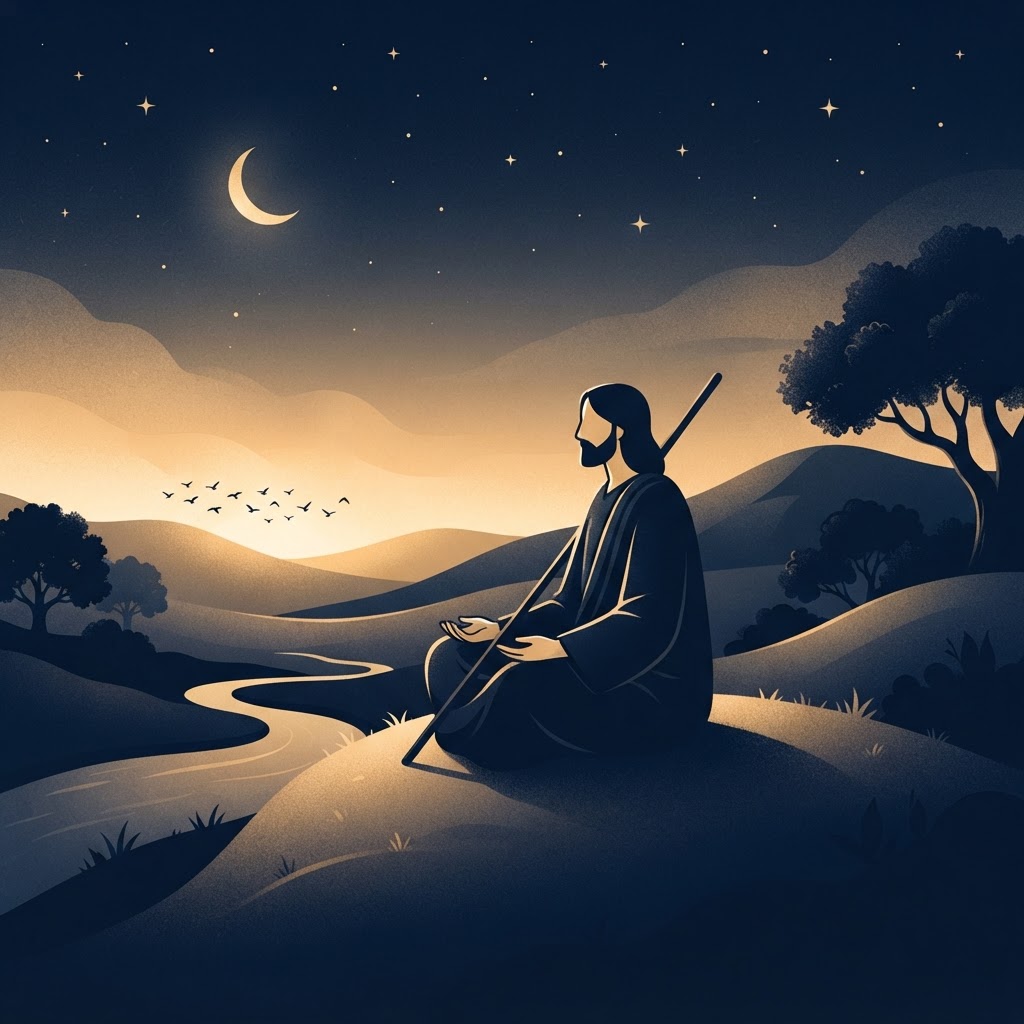
Be Still: The Gift of Sabbath Rest
PeaceThroughout Scripture

Be Still: The Gift of Sabbath Rest

In a world that glorifies hustle, God offers a radical alternative: rest. True peace comes not from achieving but from abiding.

5 min read
Share

The Biblical Account

The word 'peace' in Scripture is shalom — not just the absence of conflict, but wholeness, flourishing, rightness. It is what was lost in Eden, what Christ came to restore, and what will be fully realized in the new creation.

God built rest into the fabric of creation. After six days of creative work, He rested — not from exhaustion, but in delight. He established the Sabbath as a gift: 'The Sabbath was made for man, not man for the Sabbath' (Mark 2:27). Sabbath is not a burden but a liberation — freedom from the tyranny of endless productivity.

The Psalms echo this rest: 'Be still, and know that I am God' (Psalm 46:10). 'In returning and rest you shall be saved; in quietness and in trust shall be your strength' (Isaiah 30:15). True peace is found not in controlling circumstances but in trusting the One who controls them.

Jesus embodied this. In the midst of relentless ministry, He withdrew to desolate places to pray (Luke 5:16). Before His crucifixion, He said: 'Peace I leave with you; my peace I give to you. Not as the world gives do I give to you. Let not your hearts be troubled, neither let them be afraid' (John 14:27). His peace is not the absence of trouble, but the presence of trust.

The World at That Time

In the ancient world, rest was a luxury few could afford. Slaves, peasants, and laborers worked from dawn to dusk, seven days a week. The Sabbath — a mandatory day of rest for everyone, including servants and animals — was revolutionary. No other ancient culture had anything like it. It declared that human worth is not measured by productivity, that rest is a right, not a privilege, and that God Himself values rest.

The concept of shalom in Hebrew thought was far richer than the English word 'peace.' It encompassed health, prosperity, justice, harmony in relationships, and right relationship with God. It was the state of things as they ought to be — what God intended in Eden and will restore in the new creation.

The prophet Elijah's encounter with God at Horeb illustrates the nature of divine peace. After wind, earthquake, and fire, God spoke in 'a low whisper' — 'a sound of a gentle stillness' (1 Kings 19:12). God's presence is often not in the dramatic but in the quiet. Stillness is not emptiness; it is the space where God speaks.

Faith Reflection

We live in an age of anxiety. We are plugged in, stressed out, and exhausted. We measure our worth by our output. We cannot stop. We cannot be still. And we wonder why we are not at peace.

God's invitation is ancient and countercultural: stop. Be still. Remember that you are not God. The world will not fall apart if you rest. The God who spoke the universe into being, who holds all things together by His word, does not need your help to keep the planets in orbit.

Sabbath is an act of war against the tyranny of the urgent. It declares: my value comes not from what I produce, but from whose image I bear. My security comes not from what I accumulate, but from whom I trust. My peace comes not from controlling outcomes, but from resting in the One who holds the outcomes.

'Be still, and know that I am God.' Stillness is not the goal — knowing God is. But we cannot know Him in the noise. We must quiet the clamor of our own striving long enough to hear His voice. God was not in the wind, not in the earthquake, not in the fire. He was in the whisper. He is still whispering. Are we still enough to hear?

Scripture Reference

Psalm 46:10; Isaiah 30:15; Mark 2:27; John 14:27; Matthew 6:25-34

“Your word is a lamp to my feet and a light to my path.” — Psalm 119:105