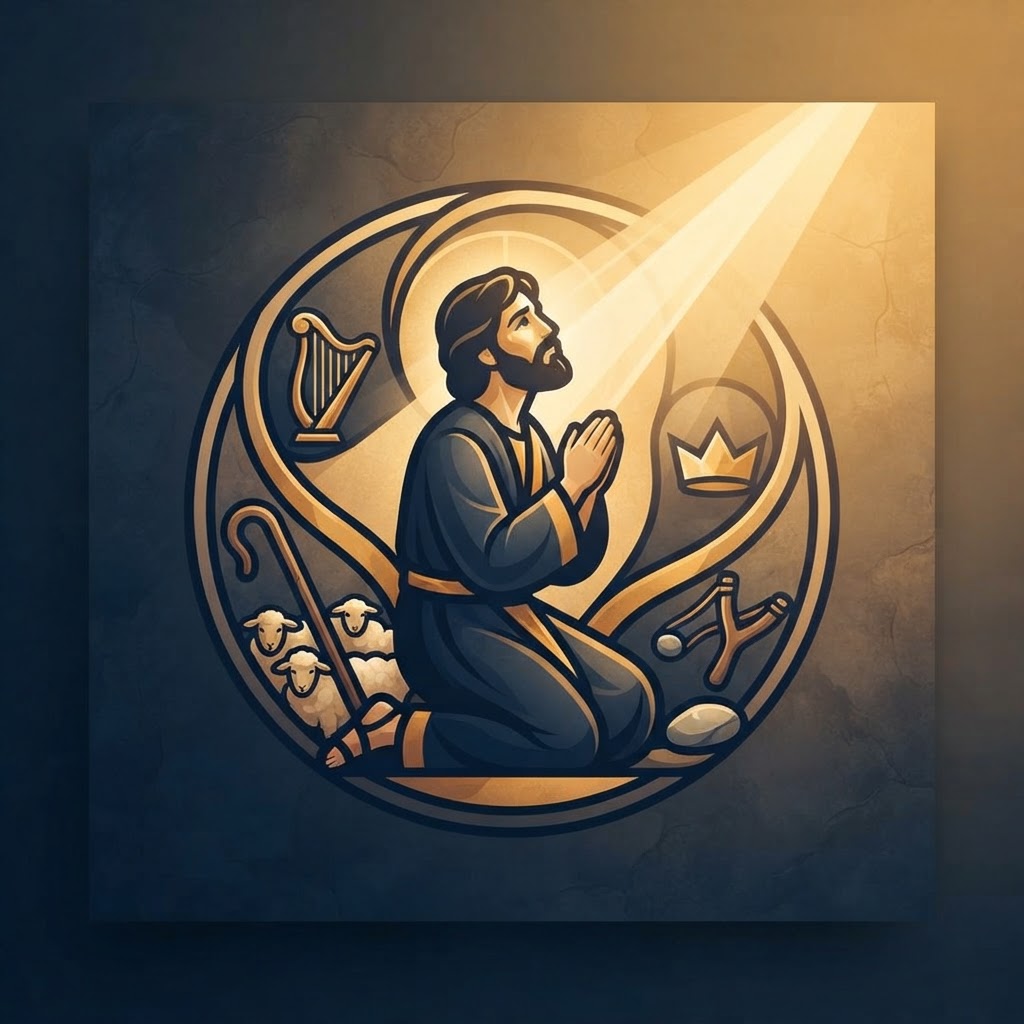
David's story spans 1 and 2 Samuel, 1 Chronicles, and the Psalms. He was the youngest son of Jesse, a shepherd boy tending sheep when the prophet Samuel came to anoint a king. God told Samuel: 'The LORD does not look at the things people look at. People look at the outward appearance, but the LORD looks at the heart' (1 Samuel 16:7).
His life was a study in contrasts. He defeated Goliath with a sling and a stone (1 Samuel 17). He played the harp to soothe King Saul's tormenting spirit. He was a brilliant military leader who expanded Israel's borders to their greatest extent. He was 'a man after God's own heart' (Acts 13:22).
And yet — he fell catastrophically. While his army was at war, David saw Bathsheba bathing, summoned her, and slept with her. When she became pregnant, he arranged for her husband Uriah to be killed in battle to cover his tracks (2 Samuel 11). The man who had refused to kill Saul when he had the chance now murdered an innocent man to hide his sin.
But David's response to confrontation reveals his heart. When the prophet Nathan exposed his sin, David didn't make excuses. He said simply: 'I have sinned against the LORD' (2 Samuel 12:13). Psalm 51 — David's prayer of repentance — is the most raw, honest confession in Scripture: 'Have mercy on me, O God... Create in me a clean heart, O God, and renew a right spirit within me' (Psalm 51:1, 10).
David wasn't called a man after God's heart because he was perfect. He was called that because, when he fell, he turned back. His heart was soft toward God — quick to repent, quick to return, quick to seek forgiveness.