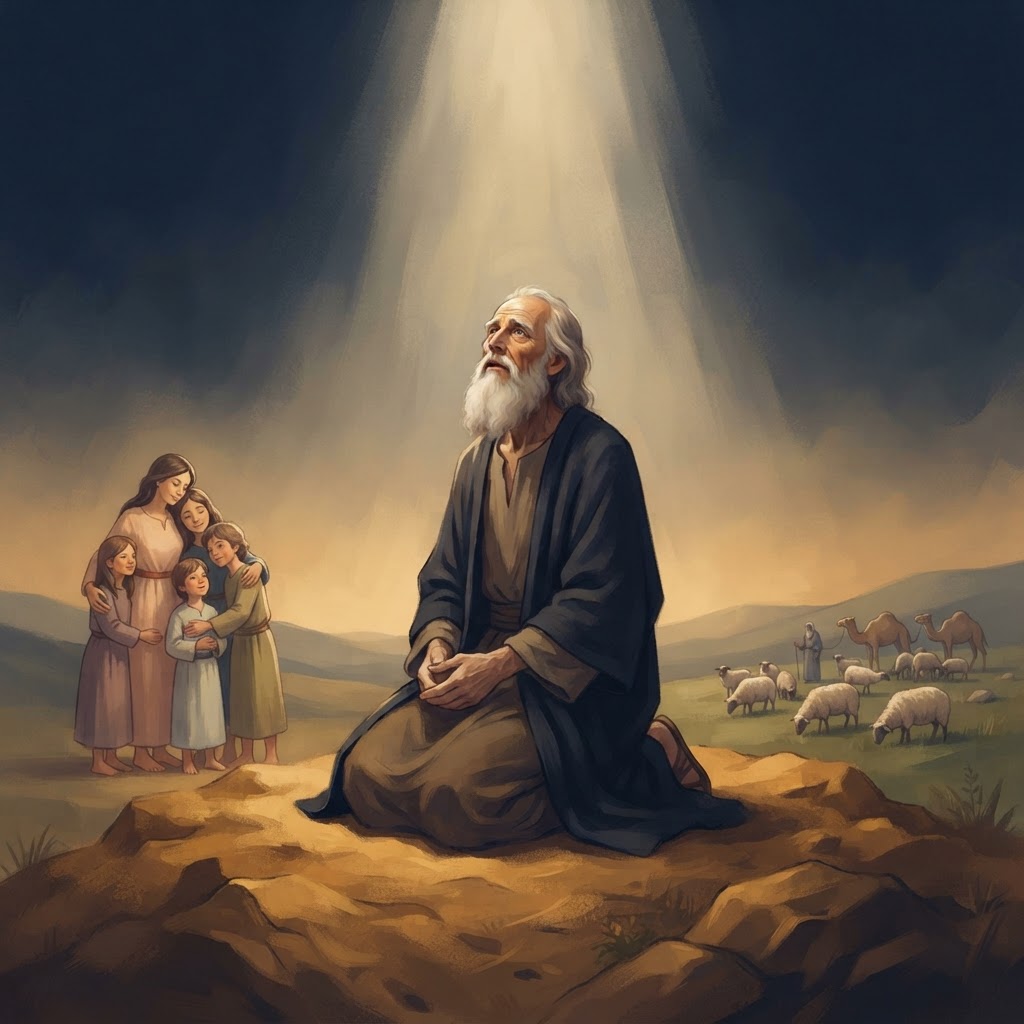
The Book of Job is one of the most profound explorations of suffering in all of literature. Job was 'blameless and upright, one who feared God and turned away from evil' (Job 1:1). He was the greatest man in the East — wealthy, respected, and the father of ten children. In a single day, he lost everything: his oxen, donkeys, sheep, camels, servants, and all ten children. His response: 'The LORD gave, and the LORD has taken away; blessed be the name of the LORD' (1:21).
Then he lost his health — 'loathsome sores from the sole of his foot to the crown of his head' (2:7). His wife said: 'Curse God and die' (2:9). Job replied: 'Shall we receive good from God, and shall we not receive evil?' (2:10).
Three friends — Eliphaz, Bildad, and Zophar — came to comfort him. They sat in silence for seven days, then began to speak. Their argument was simple: suffering is punishment for sin. If Job is suffering, he must have sinned. Job insisted on his innocence, while acknowledging that he couldn't understand God's ways.
A fourth figure — Elihu — spoke next (chapters 32-37), suggesting that suffering may be God's discipline, designed to rescue from a greater danger. Then God Himself spoke (chapters 38-41) — not answering Job's questions, but revealing His own majesty: 'Where were you when I laid the foundation of the earth? Tell me, if you have understanding' (38:4). God's speech is not an explanation; it is a revelation of His sovereignty over creation.
Job's response was repentance — not for specific sins, but for demanding an answer: 'I had heard of you by the hearing of the ear, but now my eye sees you; therefore I despise myself, and repent in dust and ashes' (42:5-6). God rebuked the three friends and restored Job: 'The LORD restored the fortunes of Job... the LORD gave Job twice as much as he had before' (42:10). He had seven more sons and three daughters, lived 140 more years, and 'died, an old man, and full of days' (42:17).