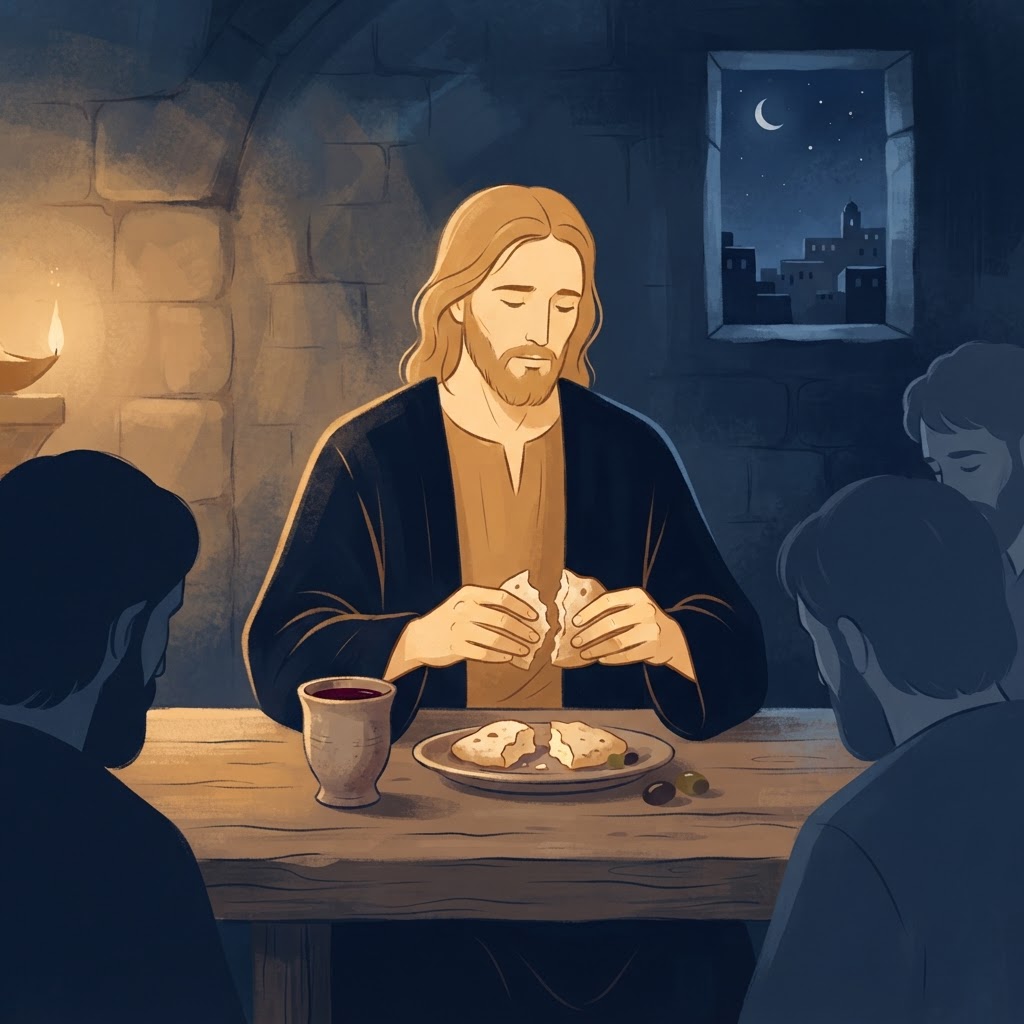
The Last Supper: A New Covenant Sealed in Blood
The Last Supper: The New Covenant in His BloodFirst Century Judea

The Last Supper: A New Covenant Sealed in Blood

In an upper room in Jerusalem, Jesus transforms a traditional Passover meal into a profound demonstration of sacrifice. Discover the deeper meaning behind the bread and the cup that changed the course of eternity.

4 min read
Share

The Biblical Account

On the first day of the Festival of Unleavened Bread, Jesus sent His disciples into Jerusalem to prepare the Passover meal. As evening fell, He sat at the table with the Twelve, knowing that His hour had come to depart from this world. During the meal, He took bread, gave thanks, broke it, and gave it to them, declaring it to be His body given for them.

After supper, He took the cup, representing the blood of the new covenant, which was to be poured out for the forgiveness of many. In this intimate moment, Jesus framed His impending death not as a tragic defeat, but as a purposeful act of redemption, inviting His followers to partake in a mystery that bridged the gap between heaven and earth.

As they ate, the tension of the coming betrayal hung in the air, yet Jesus remained focused on the eternal significance of the covenant. By identifying Himself with the elements of the Passover, He shifted the focus from the historical exodus from Egypt to the ultimate deliverance from the bondage of sin.

The World at That Time

The Last Supper took place in a first-century upper room in Jerusalem, a city crowded with thousands of Jewish pilgrims gathered for the Passover festival. This celebration commemorated the miraculous deliverance of the Israelites from Egyptian slavery, centered on the ritual slaughter of lambs and the consumption of unleavened bread and wine.

In the Roman-occupied Judea of the time, the Passover meal was a highly symbolic event held in private homes or rented chambers. The reclining posture of the guests, consistent with Greco-Roman dining customs, indicated a meal of significance and leisure, though the atmosphere among Jesus and His disciples was weighed down by the solemn gravity of the teacher's predictions.

Culturally, the concept of a 'covenant' was deeply rooted in Jewish thought, representing a binding agreement between God and His people. By introducing a 'New Covenant,' Jesus was utilizing familiar legal and spiritual terminology to signify a radical transition, marking the end of the old sacrificial system and the beginning of a direct, personal relationship through His own life and death.

Faith Reflection

When we participate in communion today, we are invited into that same upper room to remember the price paid for our peace. It is a moment to pause, reflect, and acknowledge that the bread and the cup are not merely symbols, but reminders of a living sacrifice that sustains us even in our darkest seasons.

Let this story remind you that you are part of a covenant that cannot be broken. Just as Jesus poured out His life for His disciples, He continues to pour out grace into your life, inviting you to live in the freedom He secured that night in Jerusalem.

Scripture Reference

Luke 22:7-20

“Your word is a lamp to my feet and a light to my path.” — Psalm 119:105